

You know the feeling.
You spent time grooming yourself in front of a mirror before leaving home. You’ve done your hair and possibly your makeup. You think you look decent…
Maybe you even take some selfies while you’re out, that smug expression being so familiar.
Then, someone else takes a photo of you. “Aww,” they say. They smile and hold the camera up to you. But then…
“…who on Earth is the person in that photo!?” you ask.
They think you look nice. But you think you’re posed terribly. Your smile is awkward, your hair is all over the place and you had no idea your eyebrows were that bushy.
It’s obvious—you look awful! Yet…no one seems to agree.
Why is it that when you saw yourself in the mirror or in your selfie cam, you looked fine—but suddenly in photos, you look terrible?
Here’s the good news: the others aren’t lying to spare your feelings—and, the camera has not exposed some horrible truth about your appearance.
In reality, your brain isn’t taking an objective view of pictures of yourself.
Later on, I’ll give some tips on taking photos which look closer to what you expect to see. But first, let’s understand what’s going on between how the camera and mirror represent your face.
By the end of this article, you should never need to look at a photo of yourself and feel the same way again.
In this guide…
- 📸 Why photos can make you look different
- 👀 Why other people don’t see what you see
- 🙈 Does a mirror or camera show the “real” you?
- 🤥 Why some cameras can exaggerate facial features
- 🙋♂️ Why one bad photo isn’t an accurate picture of you
- ☺️ How to look more like yourself in photos

Why do I look worse in photos than in the mirror? (The short answer…)
You don’t. It’s all perception.
There are a few things at play here.
- Almost no one has a perfectly symmetrical face. Mirror reversal creates a slight mismatch which you aren’t used to.
- In the mirror, you see a 3D image of yourself. Your depth perception—and that you aren’t standing perfectly still—add to your mind’s impression of a 3D face. This effect is lost in 2D photos.
- Camera lenses distort perspective. The amount of camera lens distortion depends on the lens and a few other conditions. But we notice when our own face looks slightly different to what we’re used to.
All these result in a version of your face which looks slightly different to what you see in mirrors. Not unrecognisably different; just different enough that it creates some discordance in your mind.
But this is very different to “looking worse” in photos!
The reality is, you’re not going crazy. You are noticing something strange that only happens in photos.
But I can promise this: you’re the only person who sees it. No one else is looking at photos of you and secretly thinking, “They look like an idiot.”
Let’s explore what’s going on.
Why photos feel so different
Humans are incredibly sensitive to small changes in people’s faces, especially our own.
Here’s how that applies to why we think we look worse in photos than in the mirror.

You’re used to seeing a different version of your face
This comes back to the mirror reversal point.
Not only are you used to seeing a horizontally flipped version of your face, but you’re also only seeing it from the front. By contrast, cameras (and other people) see your face unflipped—and from angles you can’t possibly see in the mirror.
It doesn’t sound like it should make much difference…but, when you look at a photo of yourself, you’re subconsciously expecting the version of your face you’ve been staring at for years.
We all have a natural preference for the mirror image (we just prefer what we’re used to; it’s called the mere exposure effect). So when you see the slightly different version of your face in photos, it feels…wrong.
Photos freeze a fraction of a second

Think about how you perceive people in real life.
They move. They talk. They blink. They laugh.
You don’t experience people as a series of “still frames”. You see hundreds of tiny movements flowing into each other.
Cameras don’t work this way; they capture a single still image. This means, sometimes they show you in a really great moment. But sometimes, they catch you in a less flattering one.
It’s called the frozen face effect: we naturally find people more attractive in videos than in photos because the movement smooths out awkward micro-expressions. But in static photos, not only does a 3D face collapse into a 2D image, but you’ve reduced a moving face into a single frame.
Your expression and posture don’t change much over a single second. But tiny changes over a small time can still create very different effects.
For example, I thought the photo of the subject above was very sweet. But it was part of a photo burst where the timing of most of the others was not as great.

Frame 1 of 5
Cameras can distort facial features
Not every camera sees the world the same way.
Every camera lens under the sun has some kind of perspective distortion. Think of what a fisheye lens or a door’s peephole does to an image.
Whilst it would be unwise to take portraits with a fisheye lens (or through a peephole), lenses which photographers use in portraits do still have some distortion. We can see this effect depending on how far away the camera is. When the camera is further from you, it captures a more natural version of your face.
But when the lens is much closer to your nose than to your ears, it changes your facial proportions:
- your nose or forehead looks bigger.
- your face looks rounder.
- your ears appear flattened.
Not many people take pictures just inches away from their face. But if you’re taking selfies—or if a friend is taking a picture of you from the next seat—the picture might look a bit weird for this reason.

approximately 2m away
Loading image comparison…
Tension changes your expression
Most people don’t act normally when a camera appears.
Think about it. If someone pointed a camera at you right now, you might become a bit self-conscious.
A lot of people struggle with smiling naturally in photos because the sight of a camera makes them tense up. They become slightly more aware of themselves. Their jaws tighten and their shoulders lift slightly. They suddenly forget what a natural smile feels like.
None of these changes in expression and posture is huge. But, as ever, we’re very good at noticing small changes that make someone look more awkward—especially ourselves.
Lighting changes everything
Great lighting isn’t just about how bright a photo is.
Once again, it changes how we perceive faces.
Camera flashes flatten the appearance of your face, not to mention you probably aren’t looking your best when you’re startled, when you’re squinting or when the shadows make it look like you have bags under your eyes.
Camera flashes and direct sunlight can also make you look older.
By contrast, soft, natural light does the opposite. It smooths transitions, reduces harsh shadows and usually creates a much better portrait. This is why overcast weather is much better for portrait photos than direct sunlight.
Fun fact: this is the reason changing rooms in clothes shops often have a gentle light that goes all the way up the side; it just makes you look better when you’re trying things on.
So which is more accurate: the mirror or the camera?
The answer, as it turns out, is neither.
The mirror shows you a 3D, moving/living version of your face from a short distance—flipped horizontally, and only as it looks from the front. The camera shows your face from any angle or distance as others see you—compressed into a 2D image and warped by the camera lens.
Neither is lying, but neither is perfect. They’re just different ways of looking at the same person.
But you only get used to seeing one of them
We all become more familiar with our mirror reflection.
But it’s not necessarily a more accurate version of you at all. Similarly, if someone else had spent the last 30 years staring at your mirror image, they might also find photos of you a bit strange.
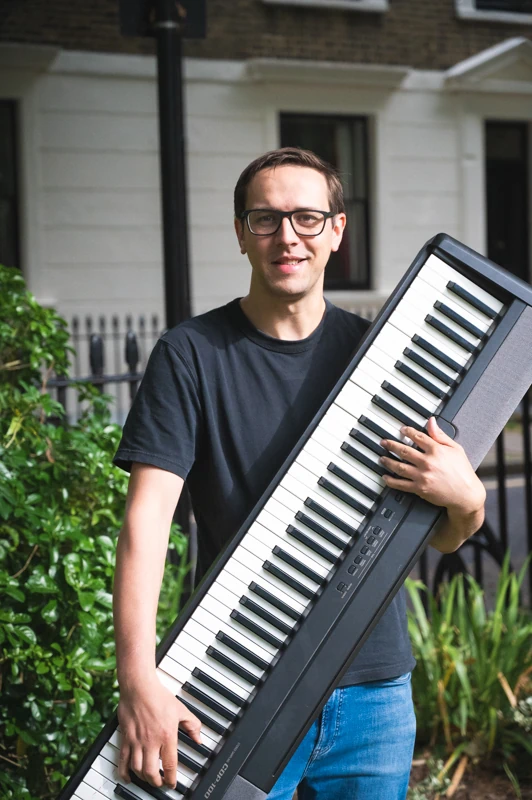
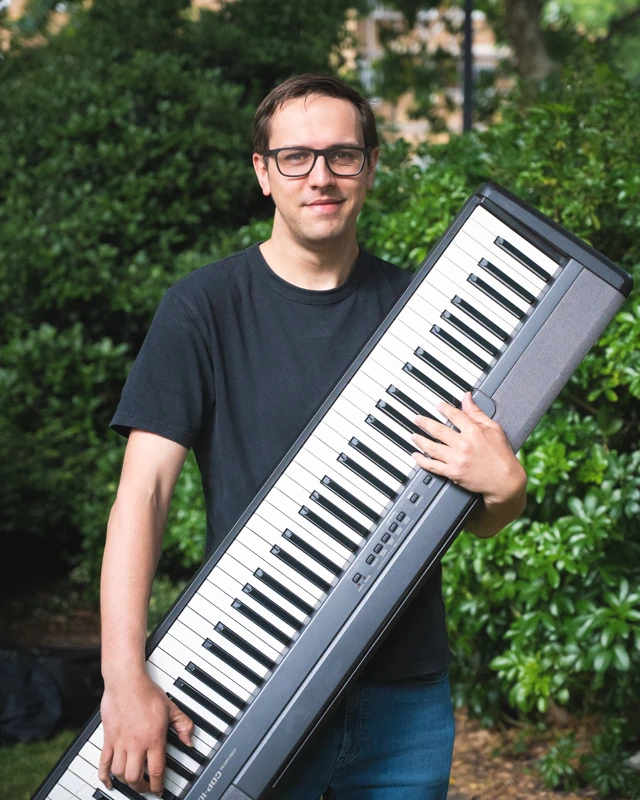
Yep—I get it. People’s faces aren’t perfectly symmetrical, but they can’t possibly be that asymmetrical, right? Well…just to prove my point about how different a face suddenly looks when you flip it, here are pictures of two of my favourite people in the world. You might be wondering why I keep including them in this post.
Here’s a confession: I don’t have photos of your friends, so I had to condition you to get a bit used to mine.
The only thing the button beneath each picture does is flip it left-to-right; I haven’t made any other changes.
Spend 10-20 seconds looking at each of the portraits before you flip them. Then, how different do they feel when you do?
Was the result what you were expecting to see?
Why other people don’t see what you see
We’ve all had someone tell us they liked how we looked in a pic, even if it made us want to run away and vomit.
We’ve also all taken a picture of someone, thought it was nice, then been ordered by them to “delete it”.
The good news is, when people tell you they like a photo of you, they aren’t lying to protect your feelings.
When you’re comparing pics of yourself to the mirror version, other people are comparing it to the version they’ve seen as long as they’ve known you.
Think about the face of someone you know well
…be it a partner, friend, or someone else.
Can you remember exactly what their nose looks like? The shape of their ears or exactly how close their eyes are?
Probably not.
But for whatever reason, we don’t judge our own faces the same way.
We notice…
- …every spot.
- …every awkward smile.
- …every stray lock of hair.
We care far more about our own appearance than anyone else. It’s not vanity; it’s just us holding ourselves to a standard we feel we should be reaching, often unfairly.
But the things we dislike about our own faces are the things no one else notices at all.
Think about someone else’s face again. If someone showed you a picture of their face which was about 2% different, you probably wouldn’t notice. But if you showed the same picture to that person, you can bet they would notice.
You might tell them it didn’t matter. How the change was barely noticeable and that they still looked nice. They might not believe you at all, because they’d be comparing the photo to an impossibly familiar mental image which no camera could ever reproduce perfectly.
And neither of you would really be wrong, either.
How to look more like yourself in photos
The answer isn’t about trying to look like someone else in front of the camera.
It’s about creating conditions which allow the camera to capture the version of you people already recognise—most of all, yourself!
Here are some tips which make a surprisingly big difference.
Stand further from the camera
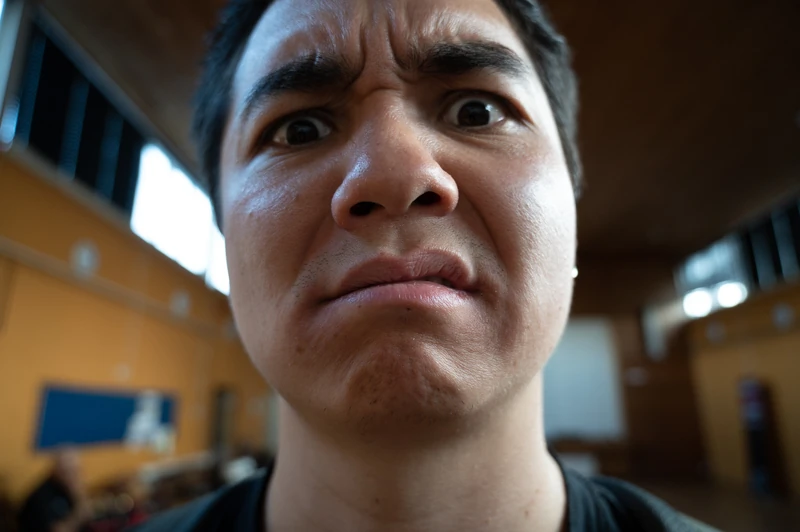
Photos taken from close up exaggerate perspective and increase the distortion from the camera lens.
Standing further away reduces this effect.
The exact camera angle matters, too. A photo taken from eye-level is usually much better than one taken from dramatically higher or lower than you (worth keeping in mind if you go the route of the selfie stick).
Use better light
Where possible, use soft, natural light.
If taking pictures outdoors, try photographing during overcast weather or in the shade where you can avoid direct sunlight.
If you’re indoors, standing near a window and facing the light produces better results than facing into the room. A ring light is a popular way to avoid harsh shadows over your face, but can result in photos looking a bit washed out.
Avoid using a camera flash unless there’s really no other choice.
Relax your jaw and shoulders
A lot of the time, looking awkward in photos has nothing to do with your smile at all. It’s to do with your posture.
Relax your jaw and drop your shoulders a bit. Notice if you’re tense anywhere else and unclench a bit. Even by “artificially relaxing”, you’ll find you look much more natural in pictures.
Take more photos!
Don’t judge yourself by a single frame.
Take more photos of yourself. Ask other people to take pics of you, or at least be receptive when/if they offer. Then, accept that you aren’t going to like every picture of yourself.
In a single session, the more photos you take, the more likely it is you get one which shows your best side.
Over a longer time, you’ll start getting used to how your face appears in photos. Then, when your own angles, facial asymmetry and slight distortions stop catching you off-guard, you’ll stop worrying that you look terrible in photos.

A bad photo isn’t a verdict on your appearance
The main thing to take away is this:
A bad photo doesn’t mean you look bad!
It just means a camera captured one moment, from one angle, with one lens. Nothing more.
If you’ve ever looked at a photo of yourself and wondered where your jawline went, why your smile looked bizarre or why your face suddenly seemed unfamiliar, remember: you’re the only person who feels that way.
And if you’re still wondering, “Why do I look worse in photos than in the mirror?”—the answer is…you don’t!
We’ve all had pictures we rather no one else saw.
We’ve all had pictures we deleted because we hated them.
It’s worth remembering that everyone else goes through the same thing, even if social media suggests that everyone else photographs perfectly and it’s only ourselves who look like half-completed waxworks.
The camera hasn’t exposed some unsavoury truth about your appearance.
It’s just showing you in a way you aren’t used to (yet).

How a professional photographer can help
Portrait photography isn’t just all about having expensive equipment.
It goes a little beyond that. A good photographer should be…
- looking for light levels that flatter you.
- finding the right camera placement to get your best angles
- helping you stop thinking about what your face is doing
- and taking enough shots that there will be some pictures in the collection that show you at your best!
Almost no one arrives at a photoshoot thinking, “I feel really confident in front of the camera.”
But throughout, they eventually stop trying to “look good” and, instead, start looking like…themselves.
If you’re looking for photographs of yourself in London for LinkedIn, social media, dating apps or just to have more photos of yourself that you like, do get in touch. I’d love to help!

Written by Tommy McDevitt
Tommy is a London-based portrait photographer, marketer, engineer and musician. His work focuses on relaxed portraits, useful photos and documentary-style photo essays, with a practical eye for how images are seen, shared and used.
Frequently Asked Questions
Neither is perfectly accurate.
The mirror shows a horizontally reversed version of you from the front, whilst the camera turns your 3D face into a 2D image from angles which you’ll rarely see in a mirror. The result also depends on the lens, camera distance, lighting and the exact moment the photo was taken. In everyday life, people see your face moving naturally from different angles, not as a single frozen image.
Not exactly.
Other people don’t see the mirror-reversed version of your face that you’re used to. They see the unflipped version of your face, moving naturally as you move, talk and change expression. Although your face may look unfamiliar to you in photos, it usually doesn’t look strange to everyone else since they’re already used to seeing you that way.
Many people think they look better in real life because photographs freeze a moving face into a single frame.
In person (and in videos), people experience your movement, personality and changing expressions over time, which gives a much more complete impression. Most of these effects are lost in photos; an awkward expression, harsh lighting or a wide-angle phone lens can all make you look less like yourself.
But this isn’t the same as “looking worse” in photos at all. It just means one camera with one lens captured one angle with one expression at one moment in time, and nothing more.
Photos do show what you look like, but they’re only one interpretation.
Camera lenses, perspective, lighting, focal length and image processing can all change your appearance. A great photo can be very representative of how you look, while a poorly taken one can exaggerate features or catch an unflattering expression that doesn’t reflect how people normally see you.
Not entirely. Most people don’t judge you from one frozen expression or one awkward camera angle.
They see you moving, talking and reacting naturally, which creates a much richer and more accurate impression of you than a single photo ever could. That’s why a photo you dislike usually doesn’t match how other people remember seeing you.